
Decentralized Physical Infrastructure Networks in Blockchain (DePIN)
Decentralized Physical Infrastructure Networks in Blockchain (DePIN) ! For over a century the physical infrastructure that powers our modern world telecommunications towers power grids server farms and global mapping fleets has been controlled by a handful of massive centralized monopolies. The construction of infrastructure is definitely capital intensive. It involves billions as upfront investments resulting in impassable barriers that block competitors out. In the end customers are limited in their choices as well as one point of failure as well as a heavily centralized control of the information that is flowing through these pipes.
Yet a radical paradigm shift is taking place. Through combining the coordination capabilities of the internet and the incentives for economics of crypto a brand new category of technology has been created: Decentralized Physical Infrastructure Networks in Blockchain (commonly abbreviated DePIN).
The innovative model of crowdsourcing the installation and maintenance of physical equipment. Instead of one company paying $10 billion for an internet connected network million people can spend $1000 to build the local node and earn crypto for their efforts. In this comprehensive extensive document well look at the design of economic flywheels the different industry segments and how to build the next generation of Decentralized Physical Infrastructure Networks in Blockchain.
What Are Decentralized Physical Infrastructure Networks in Blockchain?
To understand the scope of this disruptive technology we need to understand the basic notion. Decentralized Physical Infrastructure Networks in Blockchain are initiatives that make use of blockchains with decentralized ledgers (blockchains) and crypto economic mechanisms to encourage businesses and individuals to construct maintain and maintain physical infrastructures in the real world.
A traditional Web2 structure a business such as Amazon Web Services (AWS) or AT&T invests in capital acquires property buys proprietary hardware and recruits staff to run the equipment. Profits are returned to the business.
With the Web3 Decentralized Physical Infrastructure Networks in Blockchain model the system relies on participants from around the world (often known as “miners” or “node operators”). They purchase hardware be it a hard disk or wireless router solar panel or a dashcam and then link it up to the internet. For the privilege of extending the functionality of their device for the system blockchain automatically provides them with the cryptocurrency native to the protocol.
Through the use of Decentralized Physical Infrastructure Networks in Blockchain it is possible to democratize the ownership of physical globe shifts power and income from large corporations to those that are the ones who actually run the grid.
The Core Architecture of DePIN
The process of creating Decentralized Physical Infrastructure Networks in Blockchain is a lot more complicated than the launch of a pure digital financial decentralized (DeFi) app. It involves bridging the chaotic and unpredictable physical world to the stable unchanging digital realm. The architecture is built on four fundamental pillars.
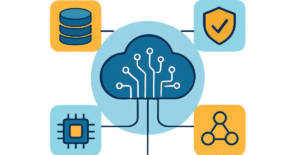
1. The Physical Hardware
It is the physical apparatus that is responsible for the utilitarian. It is dependent on the network. it could include an GPU that renders graphics a hotspot antenne that provides coverage to 5G networks or a smart meter that is used for power distribution or the weather sensor. It is the hardware that serves as the physical boundary that connects the networks.
2. The Hardware to Software Bridge (Middleware & IoT)
Since blockchains are unable to “see” the physical world and cannot be physically viewed they depend on middleware as well as Internet of Things (IoT) sensors to confirm that the hardware actually accomplishing what it promises to do. This usually involves Trusted Execution Environments (TEEs) as well as Oracle networks. If a network claims to offer 100 Mbps wireless coverage throughout the city of Manhattan then the middleware will run digital “Proof of Coverage” checks for verification before sending the information onto the blockchain.
3. The Blockchain Ledger
The blockchain is an unchangeable foundation of the entire system. Running Decentralized Physical Infrastructure Networks in Blockchain needs a fast cost effective ledger (often using networks such as Solana Polygon or special AppChains). Blockchain handles smart contracts handles transactions between hardware owners and keeps the public register of every currently active node in the network.
4. The Token Economy (Cryptocurrency)
The original token acts as the heart of the system. It functions as an incentive mechanism. The users who utilize the services of the network pay tokens (or the fiat currency that converts to tokens via the backend) The hardware owners receive the tokens to compensate for operating and capital expenses.
DePIN Economic Flywheel
The key to rapid expansion of Decentralized Physical Infrastructure Networks in Blockchain is their distinct economic incentive system commonly called the “DePIN Flywheel.” Traditional businesses face the “cold start problem” they do not have any customers due to the fact that they do not have a network and are unable to construct the network as there are no clients. Decentralized Physical Infrastructure Networks in Blockchain resolves this issue by through tokenomics.
practical tips you can apply in everyday life. From boosting confidence is how it works:
- Token based incentives help to beat the cold Start: A brand new Decentralized Physical Infrastructure Networks in Blockchain project goes live using a native token. Initial adopters are enticed to invest in and purchase devices because token reward rates are extremely high in the early stages of the project.
- Infrastructure Expands Fast: Attracted by high yields thousands of companies deploy equipment across the globe. It goes from nothing to an enormous physical footprint in just a tiny short amount of time (and without cost for the founders) as compared to traditional businesses.
- Utility attracts demand: Since the network does not incur expenses for corporate overhead real property cost or executive compensation and therefore can provide its products (e.g. the storage of data or coverage for 5G) at a fraction costs of Web2 rivals. Businesses and consumers begin to pay for access to the service.
- Network Revenue drives Value Since paying users use the benefits of the network They must purchase the native token in order to pay for the services (often using a burning and minting equilibrium model). This pressure to buy increases the worth for the token.
- A higher value for tokens attracts more Operators With the price of a token rises it is more lucrative to operate the node. This attracts an influx of new hardware operators extending the reach of the network iterating the cycle.
The performance that is Decentralized Physical Infrastructure Networks in Blockchain depends on ensuring that the flywheel in balance and ensuring that any tokens value speculation changes into real world utility and lasting network revenues.
Major Categories of Decentralized Physical Infrastructure
The world of Decentralized Physical Infrastructure Networks in Blockchain is extensive and quickly growing. Analysts typically divide the field into two distinct categories of macro economics: Physical Resource Networks (PRNs) and Digital Resource Networks (DRNs).
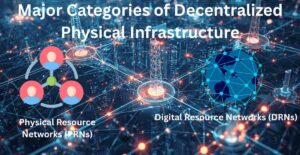
Category A: Physical Resource Networks (PRNs)
They encourage the installation of equipment that is located dependent to deliver service that is not fungible in certain geographic zones.
- Wireless and Telecommunications: Perhaps one of the most popular Decentralized Physical Infrastructure Networks in Blockchain scenario. Operators install specialized routers as well as antennas for wireless coverage that is decentralized LoRaWAN (for IoT devices) and 5G cell coverage. Customers instantly connect to these decentralized nodes instead of the corporate towers.
- Sensor Networks and Mapping: vehicles equipped with specially designed dashcams travel through cities capturing high definition instant street photos. Blockchains aggregate this information into a decentralized alternative that is similar to Google Maps rewarding drivers with their travel time and quality. Other sensors monitor high frequency weather in the area the noise pollution level as well as the quality of air.
- Energy Grids: decentralized energy grids connect homes with solar panels to high capacity batteries. In peak times it allows houses that have excess solar power to offer it to direct sale to their neighbors through smart contracts overriding the conventional central utility grid.
Category B: Digital Resource Networks (DRNs)
Within the global ecosystem made up of Decentralized Physical Infrastructure Networks in Blockchain DRNs incentivize the use of hardware that is location independent that can provide digital resources that are fungible.
- Decentralized Storage: Instead using Google Drive or Amazon AWS as well as Google Drive with your files storage DePINs let you rent the space on your hard drive that is not being used space through the network. The client files are secured and then sharded in tiny bits that are distributed over thousands of nodes across the globe.
- Decentralized Compute is one of the fastest growing areas because of the AI explosion. Compute DePINs are a way to pool the power to process idle data of all GPUs and CPUs in the world. AI graphics designers developers researchers and developers can lease this supercomputer that is decentralized to build AI models and render 3D images at only a fraction of the costs of data centers that are centrally located.
- Bandwidth as well as Content Delivery Networks (CDNs) operators share their extra internet bandwidth in order to assist with routing the flow of traffic on the internet or to cache the most popular videos locally thereby reducing internet loading times for those in their region.
Why Decentralized Physical Infrastructure Networks in Blockchain Will Win
What is the reason why a large enterprise or a typical consumer make the change from the established giants such as AWS and T Mobile in favor of Decentralized Physical Infrastructure Networks in Blockchain? These advantages are structural economical and even ideological.
1. Radically Lower Costs
Utilizing Decentralized Physical Infrastructure Networks in Blockchain communities they eliminate the middleman from corporate business. No millions of dollars in marketing budgets CEO bonus payments or massive mortgages for real estate owned by corporations to repay. Operating expenses for the network consist of power as well as localized maintenance of hardware. These huge savings are then passed directly to the customer which can make DePIN services 70 to 90% less expensive than central alternatives.
2. Unprecedented Speed of Deployment
Telecommunications firms take several years to bargain the rights to land obtain permits and then build the smallest cell tower. A decentralized network is able to create thousands of nodes within only a couple of weeks by making the process available to residents of the area who already own the real estate (their roofs or homes) as well as an internet connectivity.
3. Hyper Resilience and Anti Fragility
The centralized infrastructure is extremely vulnerable. A small power loss at a data center of AWS could shut down the internet. Storms can devastate one tower in a citys. Decentralized Physical Infrastructure Networks in Blockchain have the inherent ability to be robust and secure. Because the coverage and data is provided by thousands of separate nodes scattered across cities or across the world There isnt a single source of failure. In the event that 10% nodes are offline The network will self heal and then reroutes traffic around the damaged area.
4. Democratization of Wealth
The wealth created through global infrastructure was kept by institutions and conglomerates. DePIN converts users into owner. If you contribute to the development of the community by operating the node you get the same equity stake the success of the network through tokens. It represents a massive wealth redistribution mechanism for the digital age.
Challenges and Roadblocks
The process of scaling Decentralized Physical Infrastructure Networks in Blockchain will not be without obstacles. To make this model a reality and gain widespread adoption the sector has to address a number of bottlenecks that are critical.
1. Hardware Production and Supply Chain
Software is scalable indefinitely and at a rapid pace while hardware is unable to. When bull markets are in full swing when the demands to mine DePIN networks is often greater than the production capacity of hardware companies. Worldwide supply chain problems (like the latest shortage in semiconductor chips) could severely limit expansion of the network.
2. Quality Control and “Lazy” Nodes
When a central corporation constructs the mobile tower they make sure the tower is working flawlessly. If an individual decides to set up a router in their home and provides service its likely that the quality can vary. The biggest challenge facing Decentralized Physical Infrastructure Networks in Blockchain is constructing strong digital proofs (like Proof of Coverage or Proof of Compute) to assure that the nodes provide an efficient high quality service that is do not abuse the system for tokens of reward.
3. Regulatory and Legal Uncertainty
The world of physical reality is highly restricted. The frequency of telecommunications distribution of energy as well as privacy regulations for data are different from state to states. Regulators are trying determine how best to label individuals who are selling surplus solar energy to neighbors through a smart contract. Understanding these old regulatory structures with no centralized legal compliance department is an enormous challenge.
4. Token Price Volatility
The DePIN flywheel can be described as the double edged weapon. When the market for cryptocurrency enters into a bear market then the value of the native cryptocurrency could fall. If the value of a token drops far enough it might become unprofitable for the operators to pay the energy required to power their machines. If users unplug their computers then the power of the network diminishes and causes an “death spiral.”
Real World Examples Paving the Way
In order to fully understand the technology it is essential to examine the innovators. Actual examples that demonstrate Decentralized Physical Infrastructure Networks in Blockchain are:
- Helium (HNT) Helium (HNT): The symbol of Decentralized Physical Infrastructure Networks in Blockchain . Helium began as an IoT network but has since developed into a decentralized cell network. Many thousands of people across the globe have opted to purchase Helium hotspots to provide local wireless coverage as well as earning HNT tokens the process.
- Filecoin (FIL) and Arweave (AR) The two networks are enormous decentralized alternatives for Amazon S3. Through enticing data centers and users to share their storage capacities theyve created exabytes of storage that is decentralized which is completely secured with digital proofs.
- Render Network (RNDR) & Akash (AKT) They are platforms allow for decentralization of the power of computation. Render concentrates on the pooling of global GPU capabilities to render intricate visual effects in 3D as well as Akash is an open cloud computing marketplace that can be used for general server applications.
- Hivemapper (HONEY) It is a uncentralized map network. The users install a dashcam in 4K inside their vehicles. While they travel on their routine they track the city earning tokens. As the network employs thousands of drivers who drive every day this data on maps tends to be more current as compared to centralized competitors.
Future: AI Convergence and Mainstream Adoption
In the future the convergence with Artificial Intelligence as well as Decentralized Physical Infrastructure Networks in Blockchain is the upcoming technological breakthrough.
The rapid expansion of AI demands huge amounts of storage for data and GPU computation power. Both are currently controlled and limited by only a few technology giants. Decentralized Physical Infrastructure Networks in Blockchain can easily serve as the foundational hardware for AI. AI revolution. Through crowdsourcing GPUs across the globe DePIN can provide the uncontrolled decentralized compute needed to build open source AI models. This will ensure it is Artificial General Intelligence (AGI) cannot be managed by one company.
In addition as User Experience (UX) increases and the elements of blockchain improve they disappear completely from the view of consumers. A business will simply pay for cheap reliable cloud compute using a credit card completely unaware that on the backend their workload is being distributed across thousands of decentralized nodes and paid out in micro crypto transactions.
Conclusion
The change from centralized corporations to community owned physical networks is not just an improvement in technology. It is an entire rethinking of how we construct our world.
Decentralized Physical Infrastructure Networks in Blockchain can solve the cold start issue of expensive infrastructures match the economic incentives for builders as well as the users. They also create extremely resilient and cost effective infrastructures. Even though challenges in supply chain management as well as quality control as well as regulatory compliance but the financial efficiency of crowdsourced infrastructure is mathematically proven. It is worth investing time into understanding Decentralized Physical Infrastructure Networks in Blockchain now is like knowing about the internet back in the 90s. It is the fundamental base on which the future of decentralization is being built.