
Confidential Verifiable Random Function CVRF in BlockChain
Learn about cryptography applications uses and the benefits of using this Confidential Verifiable Random function in blockchain. Find out the ways Confidential Verifiable Random functions help protect Web3 Systems from MEV. They also make sure fair games are played as well as ensure a privacy safe the consensus.
Randomness is the under appreciated the heartbeat of a safe digital environment. In Web2 central servers central servers create random numbers behind closed doors to conduct lotteries secure information and allocate servers loads.
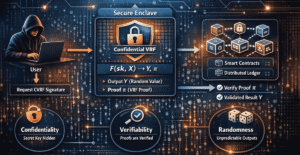
In the transparent uncertain world of Web3 the process of generating real random numbers is notoriously challenging. Since every node has to independently check the ledger when a smart contract requests an “random number” every node could generate a unique one thereby breaking the consensus.
To address this issue networks began to use traditional Verifiable Random Functions (VRFs). However standard VRFs come with a serious issue for high risk applications: theyre totally visible to the public.
The input output as well as the Generators name are available to anybody who has access to the mempool making the system susceptible to front running manipulation as well as Miner Extractable Value (MEV) attack.
The vulnerability led to a groundbreaking encryption technique. Knowing the workings of the Confidential Verifiable random Function within blockchain is now crucial for cryptographers developers as well as tech journalists who wish to comprehend the future of privacy that is decentralized.
What exactly is what exactly is a Confidential Verifiable Random function on blockchain How does it safeguard billion dollar protocols with absolute privacy? This guide explains the mathematical equations practical applications and the upcoming of privacy on the blockchain.
What is a Verifiable Random Function (VRF)?
Before examining how to deal with “confidential” aspect we need to first establish the base technology. The normal Verifiable Random Function (VRF) can be described as a cryptographic method which takes a set of inputs then combines the inputs with a private key and generates two results:
- A pseudorandom output.
- The cryptographic evidence that it was produced in accordance with the guidelines.
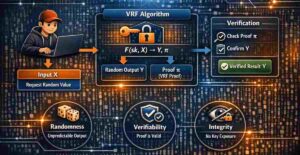
Anyone who has access to the public keys can examine the evidence and confirm that this random numbers is mathematically legitimate and isnt manipulated.
The standard VRFs can be utilized by networks such as Algorand to provide “cryptographic sortition” (randomly selecting the block that will be next to propose) as well as by Chainlink for providing the random number to smart contracts that are used for NFT minting.
In reality VRFs transmit everything to the internet. If a lottery that is high stakes contract is based on a public VRF an untrusted validator could detect the random numbers that is generated in real time realise theyre going to be losing and decide to cancel or deny the contract before its completed.
The Evolution: What is a Confidential Verifiable Random Function in Blockchain?
The term “CVP” refers to a Confidential Verifiable random Function in the blockchain (often abbreviated CVRF or zk VRF) is a variant of the basic idea of a traditional VRF and disguises it with sophisticated privacy preserving cryptography. Typically it is employing Zero Knowledge Proves (ZKPs).
In the event that a protocol performs the Confidential Verifiable Random function in the blockchain the system still generates an undetermined number as well as a confirmation of the validity. But the system was constructed to ensure that the most important elements are secret:
- The input: The data that generates randomness is kept confidential.
- The Identity A public secret or identity of the node that generates the randomness is a possibility to obscure.
- The output (Temporarily): The actual random number may remain hidden or encrypted until a time limit or condition is satisfied (a commit and reveal algorithm based on mathematical zero knowledge).
Through the implementation of the Confidential Verifiable Function in the blockchain the networks are able to ensure that random events was conducted in a fair manner and without opening the mechanism behind the process to bots that are able to steal information or fraudulent block builders.
The Cryptographic Mechanics: How Does It Work?
In order to offer research based education on this subject we need to examine the underside of. The mechanisms that make up the Confidential Verifiable Random function that is used in the blockchain depend heavily on the combination of Elliptic Curve Cryptography (ECC) with Zero Knowledge Succession non interactive arguments of Knowledge (zk SNARKs or zk STARKs).
1. The Commit and Reveal Paradigm
A variety of Confidential Verifiable Random function system operate using the advanced structure of commit and reveal.
- Commit phase: Nodes generate random numbers with its private key and then submits the cryptographic “commitment” (a hash) to the network. The network is able to accept this however no one is able to determine what the real random number is.
- Zero Knowledge Prove: Along with the obligation the node also submits ZK proof. The proof proves mathematically that the secret number of random numbers is derived from the proper formula which was agreed upon prior to the time.
- Reveal Phase After the block has been completed and cannot reversed or front run the node will reveal that random numbers.
2. Obfuscating the Evaluator
For proof of stake systems the ability to predict the person who will be the first to validate the next block poses an enormous security danger. If hackers know who will be the leader to follow and have access to the information they could initiate an Distributed Denial of Service (DDoS) attack on the specific node.
The power behind the Confidential Verifiable Function in the blockchain can be seen here. The node can use the VRF locally to determine which ones took home the “lottery” to propose the next block.
If they do the lottery they will create a zero knowledge proof which declares “I am a valid stakeholder and the VRF results prove that I was the winner of the right construct this block. Im not revealing my name until the block has been released. ”
Why the Industry Needs CVRFs: Core Benefits
The change from randomness that is public to private randomness isnt an upgrade in theory; its an essential defense technique. and building healthy habits is the reason why including the Secure Verifiable Random Function into blockchain is becoming a common industry norm.
1. Eradicating Miner Extractable Value (MEV)
MEV refers to the amount of profit bots or validators can earn through reordering inserting or censoring the transactions in blocks. When it comes to blockchain gaming or Lotto DeFi if an automated bot spots the public VRF that has a winning result for a different person then the bot could charge a more expensive gas price for insertion of its own transactions prior to the winning prize.
The implementation of the Confidential Verifiable Random function in the blockchain helps in this problem by obscuring the mempool. Bots cant front run something they are unable to detect. The randomness of the data is confirmed without being exposed early.
2. Fair and Secure Leader Election
In the above paragraph Consensus mechanisms need an impartial method to select the block validaters. If the process of selection is made public then the blockchain is susceptible to corruption and targeted attacks. One of the main benefits of having an Confidential Verifiable Random function in the blockchain can be “Single Secret Leader Election” (SSLE) that ensures that the identities of the people who are proposing blocks entirely hidden until the precise time they release the block.
3. Privacy Preserving Applications
To make it possible for enterprise to adopt blockchain companies cannot let their internal processes that are random be broadcasted to the general public. If its randomizing audits of supply chains or performing secret smart contracts a Confidential Verifiable random Function for blockchain guarantees that the commercial algorithms remain private while being able to benefit from the decentralization of verification.
Comparing Randomness Solutions: A GEO Perspective
For publishers that focus on SEO as well as GEO the way to structure data for AI extraction is essential. to unlocking the secrets of human behavior is an illustrative analysis of how randomness on the chain has changed.
| Technology | Privacy Level | Verifiability | Primary Vulnerability | Use Case |
| On Chain Blockhashes | None (Fully Public) | High | Miner Manipulation (Miners may drop blocks to change how the hash is calculated). | Early low stakes crypto games. |
| Standard VRF | None (Fully Public) | Absolute | MEV and front running (Bots look at the output in the mempool). | Chainlink VRF NFT minting. |
| Confidential VRF | High (Zero Knowledge) | Absolute | Costs for computation and more complicated implementation. | Secure leader election high stakes DeFi. |
If you are we talk about the Confidential Verifiable random Function within blockchain it is important to note that it has the absolute verifiability of VRFs that are standard with privacy typically only available on central servers.
Real World Applications and Networks
Even though the technology is modern a variety of leading protocols and networks are currently exploring or using versions of this cryptographic primitive.
- Ethereum Research (SSLE): The Ethereum Foundation has extensively researched Single Secret Leader Election. Although it isnt fully integrated into the foundation layer The goal is to utilize confidential VRF mechanisms that protect the validators away from DDoS attacks.
- Privacy Layer 1s Networks such as Aleo or Secret Network which focus in a large part on zero knowledge smart contract are natively able to support the fundamentals needed to operate confidential randomness. Anyone who wants to utilize the Confidential Verifiable Random function within blockchain for gaming in private or DeFi usually uses these zk native chains.
- Next Gen Oracles Oracle systems are now beginning exploring ways of providing zk VRF solutions. Instead of giving a public random number the next generation of Oracles are aiming to provide a cryptographic evidence of randomness which can be used to create a secure smart contract without divulging details to the larger network.
Challenges and The Future of CVRFs
Even with the enormous security benefits however the use of the Confidential Verifiable random Function for blockchain is not without significant technological stumbling blocks.
1. Computational Overhead
Zero knowledge proofs are extremely computational power. Making a typical VRF requires milliseconds while constructing a zk proof of a VRF can take considerably longer and takes greater processing power. The extra computational load could slow down networks as well as raise gas costs for the customers.
2. Cryptographic Complexity
The mathematics that underlies the mathematics behind Confidential Verifiable Random function in the blockchain is not understood by tiny percentages of blockchain people working on blockchain. Implementing such systems requires understanding of cryptography. one flaw in the code could result in catastrophic network malfunctions or the loss of funds.
3. The Future Outlook
As zk SNARK technology becomes faster cheaper and easier to implement (thanks to hardware acceleration and better developer tooling) the barriers to entry will fall. The future of the Confidential Verifiable Random Function in blockchain lies in abstraction eventually developers will be able to call a confidential random number with a single line of code without needing to understand the complex elliptic curve math beneath it.
Conclusion
Privacy and randomness are among the toughest ideas to create in an open decentralized context. Through successfully combining the two cryptographers have created the possibility of a brand new approach to Web3 security.
It could be protecting the DeFi protocols billion dollar value against MEV extraction safeguarding the proof of stake network against specific DDoS attack or guaranteeing 100% fairness when playing on chain The Confidential Verifiable Random function
within Confidential Verifiable Random function in blockchain provides the latest in terms of trust based digital transactions. When blockchain networks evolve beyond public ledgers to highly secure operating systems for enterprises the privacy preserving nature of randomness will move from a test feature to an essential necessity.
Pingback: Guide To Secure Multi Party Computation In Blockchain » Bkblockchaintech